








IN CONVERSATION WITH.ALEXANDRA GILBERT
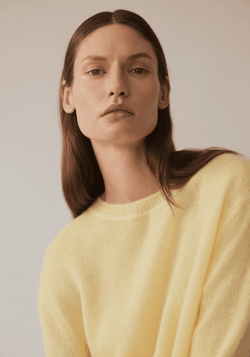
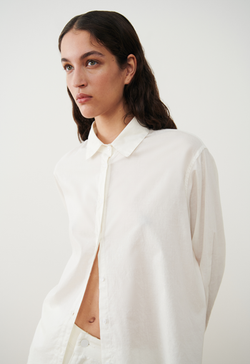
Shot for W26, we sat down with Alexandra Gilbert, Head of Content at Prime Video Australia and New Zealand. From content curation to cultural resonance, Alexandra reflects on instinct, restraint and what it means to build something that lasts. Alexandra has been wearing Jac + Jack for years, and it’s a joy to see women in leadership navigate their world with confidence, creativity, and style that feels entirely their own.
What drew you to a career in content, and how has that journey shaped the way you approach your work today?
I’ve always been interested in how people spend their time - what they choose at the end of a long day, what they return to, what becomes part of their rituals. Content was a way into that. Over time, it’s taught me to value restraint, timing and intuition just as much as big ideas.
At Jac + Jack, we often talk about timelessness and authenticity in design. In your view, what makes a piece of content feel timeless or culturally resonant?
It reflects how people actually live - what drives or disturbs them, or both. Timelessness isn’t about being set in a particular time or place; it’s about tapping into universal feelings and experiences that transcend the specificity of the setting.
Can you share a project or moment at Prime Video that challenged your thinking or pushed you in a way you didn’t expect?
When I initially transitioned from being a lawyer to the content side of Prime Video, I was working on our content marketplace business where we redistribute third party subscriptions such as Hayu and Paramount+ through Prime Video. It was my first real lesson in the power of curation over competition. At first, the lawyer in me couldn’t understand why we’d give our ‘prime real estate’ to other streaming brands. But I quickly realised that Prime Video isn’t just a label; it’s the ultimate concept store. Just like a high-end boutique thrives by mixing its house line with the best global designers, we found that our real value lies in being the destination where everything the customer loves lives under one roof.
Fashion and film/TV often influence each other. Are there any recent Prime Video titles where costume or style played a particularly meaningful role in storytelling for you?
I loved the sartorial narrative in The Better Sister. Jessica Biel’s wardrobe was a character of its own. It started with this razor-sharp, ‘power’ tailoring - structured blazers and perfectly tailored dresses that felt like armour. But as her life begins to unravel, the styling follows suit. Watching her transition from that polished perfection into dishevelled loungewear was such a visceral way to track her mental state. Her fashion told the story of a woman losing control.
What’s a misconception people have about working in content strategy at scale, and what do you wish more people understood about the craft?
The biggest misconception is that audiences are a monolith - that everyone wants the same thing at the same time. While we love a global trend like The Summer I Turned Pretty - a cultural moment where everyone is bonding over it - content strategy at scale is actually much more nuanced. Sometimes you want the comfort of a vintage classic like 90210, and other times you’re looking for a sharp, high-stakes thriller like The Better Sister. My job isn’t just to find the next big trend; it’s to curate a library that fits every facet of a viewer’s life.
What responsibility do you feel comes with being a visible woman in a senior role - particularly for the generation watching?
When I think about how I show up - in conversations about life or career - I feel a responsibility to represent a more honest version of power. I wasn’t someone with a rigid five-year plan; my career has been a series of iterative surprises. By being open about my self-doubt and the unexpected turns that shaped my path, while also holding a quiet confidence in my ability to navigate uncertainty, I hope I can broaden the definition of what leadership looks like. You don’t have to be hard-edged or relentlessly forceful to succeed as a woman in what is still a male-heavy media world. You need self-worth, resilience, and the courage to keep positioning yourself for the next opportunity - even when the path isn’t linear.
We’re curious about habits behind creative leadership - are there routines or rituals that help keep you inspired or grounded?
While I’m on the business side of media rather than the production side, what I’d consider my ‘creative’ work is the architecture of our strategy. To keep my perspective fresh, I create mental white space with a slow morning: coffee, reading, and a walk with my dog in nature. I’ve found that I can’t think strategically if I’m tethered to a desk, and those quiet moments outside are where the dots finally connect.
Thinking about the future of content: What trends - cultural, technological, or aesthetic - do you find most exciting or impactful right now?
I often think about it like a great meal. The ‘recipe’ is the story - it needs that timeless core with a surprising twist to feel fresh. But as an executive, my job is also to ensure the service is catering to the audience’s needs at any given moment. The tech improvements we’re making in personalised discovery are what allow us to get that specific ‘dish’ to the right person when they need it most. I’m excited by the tech improvements, moving the viewing experience from a fixed menu to something that adapts to the individual’s mood and needs in real-time.
Outside the world of film and streaming, what creative disciplines (architecture, fashion, visual arts, etc.) influence the way you think about storytelling?
Outside of media, I’m deeply influenced by food and cooking. I read cookbooks every day and am always looking for recipes with a surprising ‘twist’. You can take a timeless, foundational recipe and completely elevate it with one unexpected element - a specific spice or a hidden anchovy that adds depth without being obvious. I think about storytelling the same way. We often acquire content with universal, timeless tropes - like the ‘hero’s journey’ or a ‘star-crossed love story’ - but the challenge is finding that ‘hidden anchovy’. It’s about identifying the one surprising, contemporary element that makes a classic story feel like something the audience is tasting for the very first time.
As audiences become more discerning, what do you think they’re craving more of - and less of - from content today?
I think audiences today are craving a dual existence. On one hand, there’s a massive hunger for communal ‘event’ culture. We’re seeing it with huge watch parties for show finales or live sports in pubs - it’s the desire to be part of a ‘we’ and have a shared cultural moment. But on the flip side, there’s a deep craving for the quiet, tailored experience. This is where discovery tech comes in - finding that perfect story that feels like it was made just for you, which you can enjoy in your own space. It’s a bit like our social lives: sometimes you want to get dressed up and go to the cocktail party to feel the energy of the crowd, but other times you just need to be on the couch in your comfiest trackies with something that speaks directly to you. As an executive, the challenge is ensuring we serve both - the big, loud blockbuster moments and the intimate, serendipitous discoveries.
What responsibility do platforms like Prime Video hold in shaping culture, and how do you approach that responsibility as a leader?
To me, leadership in this space means ensuring our service isn’t just a ‘global export’, but a reflection of the Australian and New Zealand audiences we serve. Whether it’s through our original slate, strategic acquisitions, or our partner offerings, my responsibility is to ensure that when a viewer in Sydney or Auckland opens Prime Video, they feel seen and understood. If we can delight an audience with a story that feels authentically theirs, we’ve fulfilled our most important responsibility as a streaming service.
How would you describe your personal style?
Classic and casual. I tend to lean towards timeless neutrals because I like my wardrobe to be functional and well used, not tucked away for special occasions. That said, I always keep a few vibrant, loud pieces in the mix. It’s fun to have a few things that pop and start conversations.
SHOP THE EDIT
${ productFlags[0] }
Size:
${ currentVariant.title }
Change
${ variant.title }
${ productFlags[0] }
Size:
${ currentVariant.title }
Change
${ variant.title }
${ productFlags[0] }
Size:
${ currentVariant.title }
Change
${ variant.title }
${ productFlags[0] }
Size:
${ currentVariant.title }
Change
${ variant.title }
${ productFlags[0] }
Size:
${ currentVariant.title }
Change
${ variant.title }
${ productFlags[0] }
Size:
${ currentVariant.title }
Change
${ variant.title }
${ productFlags[0] }
Size:
${ currentVariant.title }
Change
${ variant.title }
${ productFlags[0] }
Size:
${ currentVariant.title }
Change
${ variant.title }
${ productFlags[0] }
Size:
${ currentVariant.title }
Change
${ variant.title }
${ productFlags[0] }
Size:
${ currentVariant.title }
Change
${ variant.title }
${ productFlags[0] }
Size:
${ currentVariant.title }
Change
${ variant.title }
${ productFlags[0] }
Size:
${ currentVariant.title }
Change
${ variant.title }
${ productFlags[0] }
Size:
${ currentVariant.title }
Change
${ variant.title }
${ productFlags[0] }
Size:
${ currentVariant.title }
Change
${ variant.title }